
Halloween has never been a cut and dry subject for me, partly because my relationship with it began long before Christ was at the center of our home.
My parents were not saved and born again until I was well on my way toward my teenage years, so my earliest memories of October look much like the memories of millions of other American children.
My mother and grandmother were exceptional seamstresses, which meant Halloween usually involved some of the best homemade costumes on the block.
There was fabric spread across tables, fittings, last-minute adjustments, candy, and the excitement of becoming something entirely different for an evening.
Nobody in our home understood the night as participation in evil or as some deliberate spiritual statement.
We were a lost family doing what most families around us considered harmless fun.
I think that matters when Christians talk about Halloween because the majority of people handing candy to children tonight are probably much closer to the family I grew up in than to whatever dark motives we may imagine for them.
They are parents taking pictures of their children dressed like princesses, superheroes, cartoon characters, or whatever costume they begged for at the store.
They are grandparents waiting at the door with a bowl of candy.
They are families who have never seriously considered the spiritual arguments Christians sometimes have about October 31 because, in their minds, this is simply something fun people do once a year.
I know that world because I came from it.
As my parents were saved, and grew in their understanding of Scripture, things began changing in our home, including Halloween, though there was no dramatic announcement or frightened purge of everything associated with October.
I was about thirteen when my dad first began feeling that perhaps our family should step away from celebrating it, and I remember the decision being left to each of us personally that year.
Years later, when I married and began raising children, my husband and I took a fairly hard-nosed approach to many of the world’s celebrations.
While our children were little, Halloween simply did not occupy much space in our home.
October 31 came, the porch light stayed off, the curtains were closed, and we went about our evening.
I want you to read this next line clearly:
I do not regret that.
Small children are impressionable, and parents have a responsibility to decide what enters their world while their understanding is still being formed.
We wanted our children to know why our family did some things differently, and we certainly did not want to make darkness entertaining simply because everyone else had decided a particular evening made it acceptable.
At the same time, we were careful about another extreme we had watched in some Christian homes.
We knew families whose children had been made so fearful of Halloween imagery that much of October became unsettling for them because every skeleton in a store aisle, ugly mask, or yard decoration seemed to carry some terrible power.
We never wanted that either.
Our children were taught that Jesus Christ was Lord, that darkness did not suddenly become more powerful because somebody hung a plastic witch from a tree, and that a decoration had only the power people chose to assign it in their own imagination.
We wanted them to understand spiritual darkness seriously without teaching them to fear cheap decorations from the seasonal aisle.
As the children became older, though, our thinking began changing again.
Our church has always been passionate about reaching people with the gospel, and our children had grown up participating in that work.
They had handed out tracts, participated in street ministry, helped distribute John and Romans, and walked through neighborhoods putting gospel material on doors.
We had spent years teaching them that outside our church walls were real people with eternal souls who desperately needed the truth of Jesus Christ.
Then one year the obviousness of Halloween struck us differently.
Here we were teaching our children to walk up to strangers’ doors carrying the gospel, while on one particular evening every year those same strangers were voluntarily walking up to ours.
Once our children were old enough to understand why our family had chosen not to celebrate Halloween, and once the costumes and decorations around them no longer held the fascination or fear they might have when they were little, we decided to handle the evening differently.
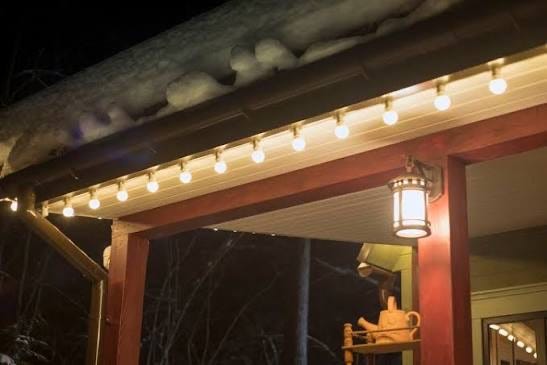
We turned the porch light back on.
We opened the drapes.
Nobody in our house dressed up.
We did not decorate for Halloween or begin treating the evening as one of our family holidays, and when somebody arrived at our door, we did not need to pretend our convictions had disappeared.
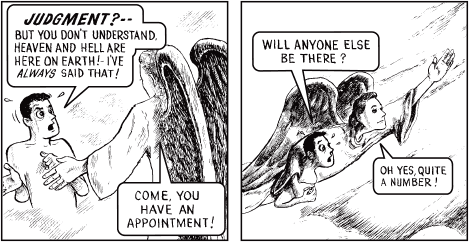
Instead, we took comic-book-style gospel tracts, wrapped three crayons around each one with a rubber band, and let our children answer the door.
A child came expecting candy and left with something to color and something to read.
Behind that child often stood parents who looked very much like the parents I grew up with, ordinary people who saw nothing particularly sinister about dressing their little ones up and walking around the neighborhood.
They were people like my husband’s family once had been and like my own family once had been, people who may never have entered a Bible-believing church and who probably were not spending that evening thinking about eternity.
Yet they had come to our door.

KEEP READING — THIS IS THE NEXT STEP
TRADITIONAL BIBLICAL HOMEMAKING
The culture told you the home was a cage. Christie built this because she found it to be a kingdom. A no-nonsense, biblically grounded guide to homemaking that actually dignifies the woman doing it.
That began feeling less like a problem I needed to hide from and more like an opportunity I did not want to waste.
Jesus said in John 12:32, “And I, if I be lifted up from the earth, will draw all men unto me.”
I think Christians have to remember who is supposed to be lifted up.
Christ.
There is a temptation, especially when we develop strong personal convictions, to begin presenting those convictions to the lost world as though understanding our standards is the first step toward understanding God.
We can become so preoccupied with demonstrating how separated we are that the lost person standing in front of us hears far more about what Christians refuse to do than about the Savior who died for sinners.
Separation is biblical.
Second Corinthians 6:17 says, “Wherefore come out from among them, and be ye separate, saith the Lord.”
But, so is going.
Jesus said in Mark 16:15, “Go ye into all the world, and preach the gospel to every creature.”
Luke 14:23 gives that wonderful picture of the servant being told, “Go out into the highways and hedges, and compel them to come in, that my house may be filled.”
Those truths belong together in the Christian life, and I think we sometimes struggle with how to hold both without allowing one to swallow the other.
We are supposed to be different from the world, while still living close enough to lost people that somebody actually hears the gospel from us.
If our separation becomes such complete insulation that we rarely encounter anyone who needs Christ, something has gone wrong with our understanding of the Great Commission.
That realization changed the way I looked at our front door on Halloween.
We were not trying to Christianize the holiday, and I had no interest in convincing myself that something became good simply because we attached a tract to it.
I simply saw one evening when people who might never knock on our door under any other circumstances were standing there willingly, smiling, with their children beside them, ready to receive whatever we placed in their hands.
How often does that happen?
Most evangelism requires us to go.
On October 31, they were coming.
I could keep the curtains closed because I wanted to make a statement about our family’s convictions, or I could open the door and place the gospel into the hand of somebody who had never asked me to explain what I thought about Halloween in the first place.
What that person actually needed was Christ.
I think sometimes we forget how strange our extra-biblical convictions can sound to people who have no spiritual foundation for understanding them.
A lost mother whose five-year-old is dressed like a firefighter is probably not going to hear a lengthy condemnation of Halloween and conclude that she desperately needs Jesus.
More often, she will conclude that Christians are strange, harsh people with an unusual amount of anger toward children eating candy.
We should care about whether our conduct obscures the gospel we claim to be defending.
That does not require watering down truth, participating in sin, or abandoning convictions so that everyone finds us pleasant.
The gospel itself will offend human pride because it tells every man he is a sinner who cannot save himself.
I simply want the offense to be the cross.
Because the offense of the cross is the one offense that cuts through the hardest heart straight to an empty place reserved for God alone.
I do not want my preferences, personality, or an unnecessarily scornful spirit standing in front of it.
Now our family is entering another season.
There is a small grandchild often in our home, and if the Lord allows our circle of grandchildren to grow, I suspect we may approach Halloween much as we did when our own children were very small.
There will be years when the porch light goes dark again because young children are learning, watching, and forming their understanding of the world, and I want their parents to have space to build a strong biblical foundation without unnecessary confusion.
I am comfortable with that.
Convictions lived wisely inside a family sometimes look different according to the season because the people we are responsible for discipling are in different places.
And one day, if those grandchildren grow old enough to understand why our family does not celebrate Halloween, I imagine I may once again look toward a front porch filled with children and see something beyond the costumes.
Souls.
Children with souls.
Parents standing at the edge of the porch with souls.
Neighbors we may wave to all year without ever having a natural opportunity to hand them the gospel.
At that point, perhaps the door will open again, there will be tracts and crayons in a basket, and another generation of children will leave our porch with the gospel in their hand, and a smile while hearing something simple like, “Have a blessed night.”
Some Christians will disagree with our family’s decision, and I am perfectly comfortable with that.
Every husband and wife have to answer to God for how they govern their own home, and I would never tell another family to violate their conscience because our family reached a particular conclusion.
There are believers I respect who will keep their porch light off tonight, and they may have thoughtful biblical reasons for doing so.
I only hope we do not become so consumed with proving that we have nothing to do with the world that we forget why God left us living in it.
The people walking past our houses are not inconveniences to our separation.
They are the mission field.
They are families like mine once was, sincerely unaware of how desperately they need Christ.
They are mothers making costumes, fathers carrying tired toddlers, children comparing candy, teenagers laughing with friends, and ordinary people moving through an ordinary evening without realizing that eternity is real.
We can teach our children why our family chooses differently without teaching them to look down on the families who do not yet know what we know.
We can guard young hearts without raising children who are afraid of the darkness around them.
And when they become mature enough, we can teach them that Christians do not merely retreat from darkness.
We carry light into it.
That balance has taken me years to understand, and I am still learning.
I know what it is to be the child in the homemade costume who had no idea Christians were somewhere debating whether my family was celebrating evil.
I know what it is to become the Christian parent who shuts the curtains because I want to protect young children entrusted to me.
And I know what it is to open those curtains again years later because the children inside my home had grown enough to see the children outside it differently.
That progression has shaped how I think about Halloween more than any argument ever did.
So this weekend, whatever decision you make for your own home, I would simply ask that we remember the purpose for which we are still here.
Guard your home.
Teach your children.
Keep your convictions.
Walk separately enough that the world can see there is something different about belonging to Christ.
But somewhere along the way, make sure the lost world can still reach you.
Because sometimes the highway and hedge is your own sidewalk.
And sometimes the lost soul Jesus told us to reach is already walking up your driveway and knocking on your door.
Biblical Womanhood
If you enjoy this post please ♥️, comment, or share—These simple gestures help share this message with others who may be encouraged and blessed by this ministry.
And if you’ve been enjoying my work for a while now would you consider becoming a paid supporter?