“Every wise woman buildeth her house: but the foolish plucketh it down with her hands.” Proverbs 14:1
When I first began thinking through the building side of this series, opening felt almost too simple.
Planting made sense immediately because women are constantly sowing something into the soil of their homes.
Praying will eventually bring us to the deepest work our hands can do.
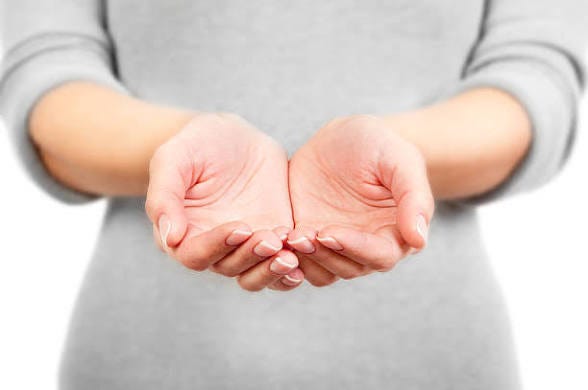
But, I kept coming back to open hands…
The more I thought about it, the more I realized how much of a woman’s influence is shaped by what she is willing to make room for.
A wise woman opens her arms.
She opens her home.
She opens her heart.
She opens enough space in her own thinking to allow the people she loves to grow without requiring them to remain exactly as they were when she first knew them.
There is something deeply feminine about open arms.
Children instinctively run toward them.
A husband knows the difference between walking into a room where he is merely acknowledged and walking into one where he is genuinely welcomed.
Affection can become so familiar in marriage that we stop realizing how powerful a simple embrace still is after years together.
The world can be hard on the people we love.
A husband may carry pressures he does not explain fully.
Children come home disappointed, embarrassed, discouraged, exhausted, or simply tired of having to hold themselves together everywhere else.
Home should have room for exhaling.
I do not mean that a mother must continually absorb every emotion in the family or make herself responsible for everyone’s happiness.
That would become its own form of exhaustion.
I mean something much more ordinary, the kind of warmth that says through touch, attention, and presence, you belong here.
There is a reason the father in Luke 15 ran toward the returning son and “fell on his neck, and kissed him.”
Sometimes the body communicates welcome before language can catch up.
I think children remember this.
They remember whether mother’s arms, attention, and affection were available.
Years later, when those same children are adults carrying responsibilities of their own, there is something precious about knowing there is still a place where they are received with warmth.
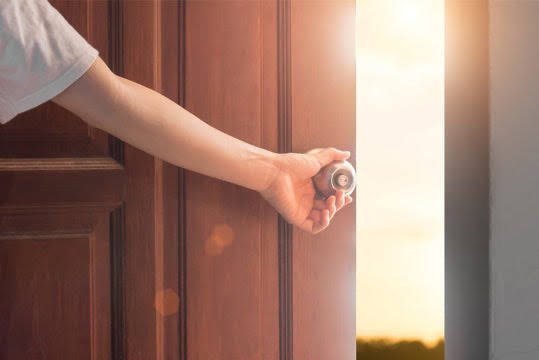
A wise woman also opens her front door.
Hospitality has become strangely intimidating in a culture filled with beautiful homes presented at their most carefully arranged angles.
We see the tablescape before we see the people gathered around it, and if we are not careful we begin believing hospitality requires a certain level of presentation before anyone can be welcomed inside.
Scripture speaks much more simply.
Romans 12:13 says we should be “given to hospitality.”
First Peter 4:9 says, “Use hospitality one to another without grudging.”
Hospitality is less complicated when we remember that the purpose is people.
A pot of soup and bread can feed fellowship just as effectively as something elaborate.
A scratched table can hold wonderful conversation.
A house with children’s things scattered about can still become a place where somebody feels seen and loved.
Some of my favorite memories have been made in homes where nobody seemed particularly concerned about impressing anyone.
You sat down.
Someone handed you a drink.
Food appeared.
Children wandered through the conversation.
Nobody apologized for the ordinary evidence that people actually lived there.
You left feeling fuller than when you arrived, and food was only part of the reason.
That is a kind of wealth.
A woman who opens her home teaches her children something too.
They begin understanding that their family does not exist entirely for itself.
They see there is room for the brethren, for someone lonely, for younger couples, for older saints, for friends passing through a difficult season.
The table stretches.
Someone pulls another chair from the other room.
Nobody dies because the towels did not match.
And somewhere in the middle of it, children learn that Christian fellowship belongs in everyday life.
Then there is another kind of opening that I am learning more about as my children grow older.
A mother eventually has to open her hands around the version of adulthood she imagined for them.
That sounds easier than it is.
We spend years teaching children how our family does things.
We establish traditions, routines, methods, standards, and countless practical ways of living that feel so normal to us we rarely consider that they are partly preference.
Then those children grow up.
They marry.
They build homes.
And more often than not they do things differently.
Perhaps they manage schedules differently than we did.
Maybe their holiday traditions shift.
Maybe they choose a different church to attend than we would choose.
Their parenting style may have its own flavor.
They might organize their home, finances, meals, or family rhythms in a way we would never have chosen.
If they are walking with the Lord, loving their families, living responsibly, and making wise decisions, there comes a point where a mother needs enough humility to let different simply be different.
There really is more than one way to skin a cat, unpleasant as that old expression may be.
I am finding that adult children can teach us things if we allow them to.
That realization can feel strange when we remember tying their shoes and reminding them to brush their teeth.
There is a part of motherhood that always remembers the child inside the adult.
But adulthood deserves room.
A grown son or daughter should not have to duplicate the family they came from in order to remain close to it.
Sometimes the most loving thing a mother can do is observe the good fruit and resist the urge to rearrange the tree.
This does not require loosening biblical beliefs.
Truth remains truth regardless of generation.
Yet wisdom learns to distinguish Scripture from the collection of preferences, or “personal convictions” we accumulated while living our own lives.
That distinction protects families.
If every decision becomes a referendum on how mother did things, adult children eventually begin editing what they share.
They grow tired of explaining ordinary choices.
Distance can develop where there was no serious disagreement at all, simply because every difference became something to defend.
An openhearted mother leaves room for growth.
She can admit when her children have found a better way.
She can enjoy the homes they build without continually comparing them to the one she built.
I think there is something beautiful about reaching the stage where children who once learned everything from us begin adding wisdom back into our lives.
The relationship becomes richer when we allow that exchange.
Proverbs 31:20 says of the virtuous woman, “She stretcheth out her hand to the poor; yea, she reacheth forth her hands to the needy.”
Her hands are extending outward.
That picture feels like the heart of opening to me.
A woman can live with her hands clenched around her home, her routines, her people, her expectations, her convictions, and everything she believes must remain a certain way in order for life to feel secure.
Or she can learn, slowly and imperfectly, to open them.
Open arms for the people God has given her.
An open door for the people He sends.
An open heart toward seasons that look different from the ones she knew before.
I am still learning this kind of building.
Sometimes I recognize afterward that I filled too much space with my opinion.
Sometimes I realize I could have welcomed someone more freely if I had worried less about how the house looked.
Sometimes I remember that affection should be expressed while the people I love are still close enough to receive it.
The wise woman buildeth her house with her hands.
And perhaps some of the strongest things she ever builds begin when those hands are open.
Biblical Womanhood
ATTENTION:
In February when we announced our memoir—“The Things We Have Wrought” quite a few of you invested a $5.99 deposit towards that work when we finished it!
It is DONE now!
If you paid the $5.99 deposit in the past few months please reach out, or check your email and spam folder for an email from me with a special link for your discounted price!
Everyone else can:
The Things We Have Wrought: 25 lessons in 25 years of marriage, parenting, ministry & life