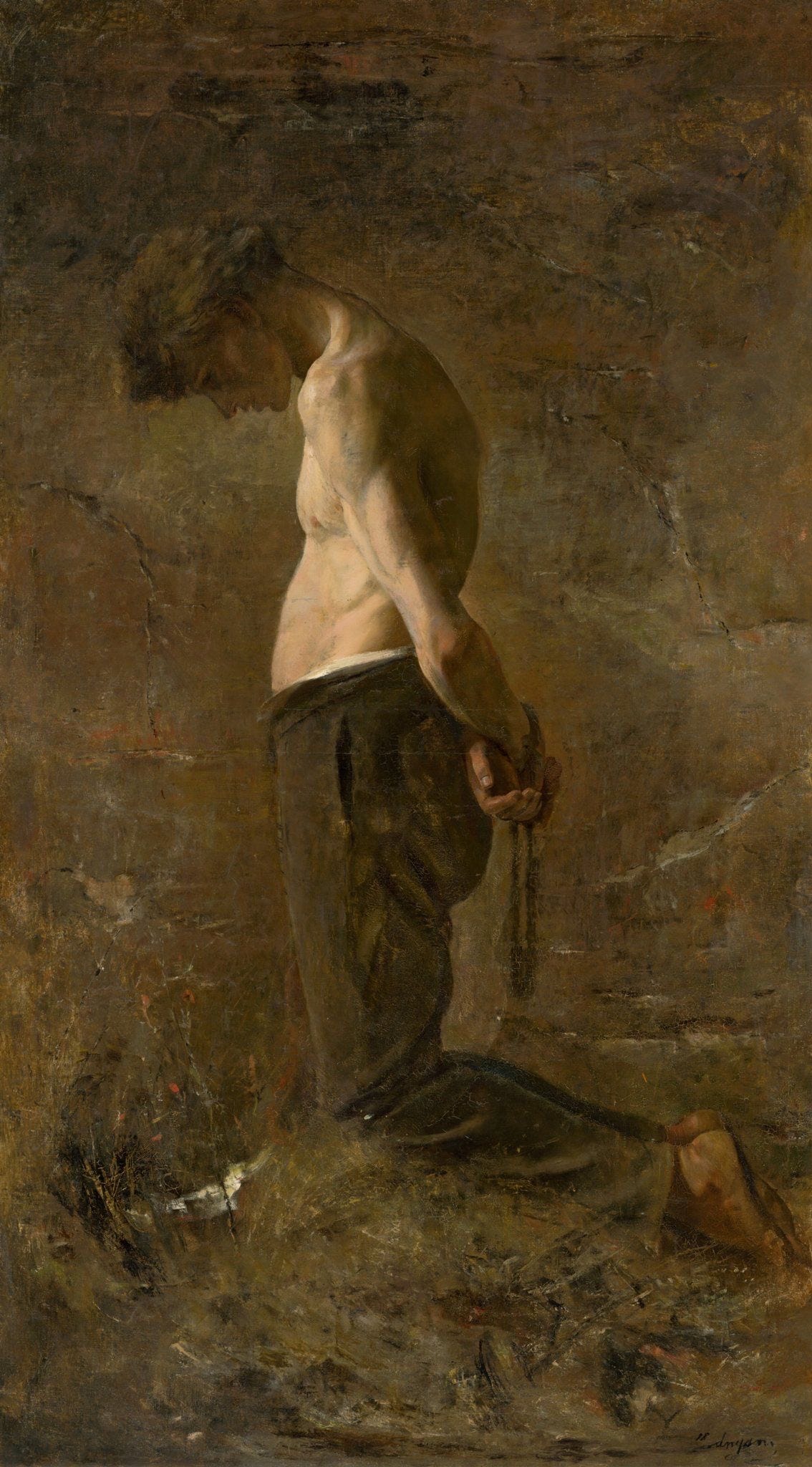
Uriah carried the letter which arranged his death. David had written it to Joab, and in it were instructions that Uriah should be put where the fighting was hardest and left without help. There is a great deal of trust in the simple act of carrying another man’s letter. A soldier takes it from his king and delivers it to his commander, and the business of the army goes on. David made use of that trust. When Uriah was dead and Bathsheba had finished mourning, David brought her into his house and she became his wife.
We are not told everything David thought during this time. It is possible to know what a man has done without knowing how he has made it bearable to himself. David had committed adultery, and when he could not conceal its consequence he had arranged a killing, and afterward he had taken the dead man’s wife. Each act had required another act until the thing was accomplished. Whatever account he gave himself, Uriah could no longer trouble it.
Then Nathan came to him with a story about two men. One was rich and had many flocks and herds, and the other was poor and had one little ewe lamb which he had bought and raised. It grew up with his children. It ate his food and drank from his cup and lay in his bosom, and he loved it as a daughter. When a traveler came to the rich man’s house, the rich man spared his own animals and took the poor man’s lamb to feed his guest.
David understood the story at once. He understood abundance and want, and he understood the particular cruelty of taking the one thing a poor man loved when there was plenty to be had elsewhere. He was angry enough to say that the man deserved to die. He ordered a fourfold repayment because the man had done this thing and had shown no pity. Nothing in his judgment suggested that he had forgotten how to distinguish good from evil. He could recognize the offense, measure its ugliness, and pronounce a sentence. Nathan had brought him a case in which he could exercise all these faculties without first remembering Uriah.
“And Nathan said to David, Thou art the man.”
The judgment was already spoken. David could not plead that he had misunderstood the rich man’s conduct, for he had explained it himself. He could not say the poor man’s loss was a small matter, for his own anger had made it large. Nathan had allowed him to speak with the freedom a man sometimes has when he thinks nothing he says will be applied to him. Then he had given the offender a name.
This is a frightening thing about David, and it ought to make us careful about the reassurance we take from our own indignation. A man may have a sound judgment of an evil and still have made a place for that evil in his life. His anger may even be sincere. David did not have to pretend to care about the lamb. The story gave him something he could condemn without making any alteration in his household, and he condemned it with the full authority of a king. Bathsheba was in that household. Uriah was dead.
There was another man, much later, who found good words ready to his purpose. At Bethany, Mary took costly ointment and anointed the feet of Jesus, and the house was filled with its fragrance. Judas objected to the expense. The ointment could have been sold for three hundred pence and the money given to the poor. It was a considerable sum, and there were poor people who needed it, so that a person hearing only the objection might have thought well of Judas. He had noticed a waste which others had permitted themselves to enjoy. He had remembered the hungry.
John supplies the fact which changes our understanding of the speech. Judas did not say this because he cared for the poor. He was a thief, and he kept the common purse and took from what was put into it. The money he proposed to save for the poor would have come into the keeping of a man who stole. His objection had the sound of compassion, and the arrangement behind it was useful to him. The poor were real, and their need was real, and he had found a way to make their need serve his own.
We should keep the difference between these men. John tells us plainly what lay behind Judas’s objection. Nathan’s story exposes David’s ability to judge another man while leaving his own conduct outside the judgment. They do not need to have had identical motives to reveal something common in us. Both accounts show how little a man’s speech about righteousness may tell us about the obligations he is actually meeting. We have to look at what he does with the power and the money entrusted to him, and at what becomes of the people who depend on his honesty.
A man may speak with considerable knowledge about the exploitation of workers. He may know how wages are kept down and how men with families are made afraid of losing their jobs, and everything he says may be true. But if he owes wages himself, there is an additional fact to be considered. His employee cannot buy groceries with his employer’s opinions. The wages remain unpaid while the employer explains the injustice of the world, and the explanation, however sound, has done nothing for the man waiting to be paid. It may have done a great deal for the employer’s opinion of himself.
The same permission can be made in a home. A person who understands cruelty when it is described in public may be slow to recognize the small, repeated cruelties by which a marriage is worn down. There are excuses available at home which would seem contemptible in a stranger’s mouth. We know how tired we were, what was said to provoke us, how many times we have been disappointed. By the time we have finished supplying the circumstances, the person we hurt can almost disappear from the account. We would see that person readily enough in Nathan’s story.
For a Christian this danger is close at hand, because we possess a language which names sin accurately. We can speak about greed, sexual corruption, falsehood, and the abuse of authority, and we can support what we say from Scripture. These are useful abilities, and other people may benefit from them. But we can also become accustomed to handling the truth as something we bring to other people. We read with someone else’s correction in mind. We finish a passage knowing who ought to hear it. After a while it may scarcely occur to us that we have been hearing it ourselves.
David’s answer to Nathan was, “I have sinned against the LORD.” Psalm 51 gives us the language of his repentance: “Have mercy upon me, O God, according to thy lovingkindness: according unto the multitude of thy tender mercies blot out my transgressions.” The man who had been so certain of the punishment another deserved now asked for mercy. There was no rich man in the prayer whose guilt could occupy his attention. He asked to be washed from his own iniquity and cleansed from his own sin. And when he prayed, “Create in me a clean heart, O God; and renew a right spirit within me,” he acknowledged how far the trouble extended. He needed God to change the man who had done these things.
Confession brings obligations with it, and this helps explain our reluctance. An unpaid wage becomes a sum we must find and hand over. A lie must be corrected before people whose good opinion we wanted to keep. An apology must be made to a person who may remember other apologies and have reason to doubt this one. There are losses which cannot be repaired merely because we are ready to admit them. Uriah did not return when David repented. Mercy is no permission to make light of what required it.
There is plenty of injustice in the world, and repentance will give us no reason to care less about the people suffering under it. The poor man’s lamb mattered. Nathan did not withdraw the story when David understood it. What changed was David’s place in it, and that is the change we are so ready to postpone. We would like to go on discussing the rich man a little longer. Meanwhile there is money in our keeping, and somebody living with the consequences of our decisions, and some wrong we have learned to describe in a way that lets us continue it. We know enough to begin there.
“Thou art the man.”