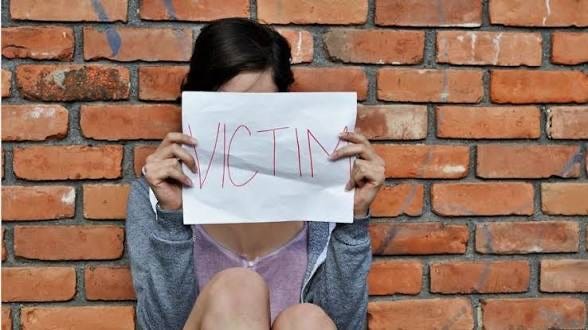
This is the fourth installment in my series on, “The Things We Were Never Meant to Carry,” and this one reaches into something our culture has become increasingly uncomfortable saying aloud:
Another person’s pain deserves compassion, but their pain does not give them authority to redefine truth for everybody around them.
The Things We Were Never Meant to Carry:
Other People’s Victimhood
Somewhere along the way, we began treating woundedness as though it automatically made a person’s interpretation of events correct.
That is dangerous ground.
People can be genuinely hurt and still misunderstand something, they can have truly experienced real injustice and responded to it sinfully.
A painful history can explain why somebody reacts strongly without making every reaction wise, and compassion toward a wounded person does not require us to surrender discernment.
Scripture gives us a far more grounded way of dealing with human stories.
Proverbs 18:17 says, “He that is first in his own cause seemeth just; but his neighbour cometh and searcheth him.”
There is so much wisdom in that sentence for the world we are living in.
The first account may sound completely convincing.
We hear somebody’s pain, identify with part of it, and immediately feel pressure to choose a side.
Social media has made this worse because stories travel faster than facts, and emotion often settles the verdict before anyone has heard enough to understand what actually happened.
Sometimes the person truly was wronged.
When that is the case, Christians should care deeply.
Abuse should never be protected by religious language.
Sin should not be excused because confronting it would make a family, church, or institution uncomfortable.
People who have been genuinely wounded may need protection, wise counsel, practical help, justice, and a great deal of patience while healing takes place.
Truth requires us to acknowledge real evil when it has occurred.
Truth also requires us to refuse things that are untrue simply because refusing them may hurt somebody’s feelings.
I think our culture has lost confidence in that distinction.
We are increasingly expected to organize ourselves around everybody else’s wounds, including the wounds they merely perceive themselves to have.
Entire conversations are shaped by the assumption that the person who feels injured should determine the meaning of what happened, what everybody else is allowed to say about it, and which standards should continue applying afterward.
That eventually becomes impossible.
Every person brings a history into the room.
Every person has tender places.
Every person has experienced some measure of disappointment, misunderstanding, betrayal, unfairness, or loss.
If truth has to be adjusted around every wound, we will eventually have no fixed truth left to stand on.
I see this especially in some conversations among women.
A woman complains about her husband, perhaps describing everything she carries in the home and calling it “the mental load,” and there can be an almost immediate expectation that the women listening will agree with her assessment of the marriage.
If another woman suggests that perhaps the husband has burdens she does not see, that communication may be poor on both sides, or that contempt toward him is becoming part of the problem, she risks being treated as though she has betrayed women themselves.
There are corners of our culture where womanhood is increasingly presented as a shared experience of being harmed by men, and every terrible story involving a man becomes proof of something about men generally.
That kind of thinking is neither wise nor fair.
A horrific crime against a woman should grieve us because a human being was harmed.
It should never become permission to treat husbands, fathers, sons, brothers, and men we have never met as though they share moral responsibility for the criminal who committed it.
Pain can tempt us to make sweeping conclusions because broad explanations sometimes make a frightening world feel easier to understand.
Scripture still requires us to judge righteously.
This same mentality can walk through the doors of a church.
Someone arrives carrying genuine church hurt, perhaps from a previous congregation where leadership behaved badly or where people failed them in a painful season.
A healthy church should be able to hear that story with compassion, and wise Christians should never dismiss someone merely because the phrase “church hurt” makes them uncomfortable.
Yet being wounded somewhere else cannot become a permanent exemption from ordinary Christian responsibility.
Eventually a person still has to forgive.
They still have to receive correction.
They still have to learn how to trust wisely again.
They still have to serve, grow, bear with imperfect people, and understand that joining another church means entering another congregation filled with sinners who will occasionally misunderstand them.
Sometimes people want a new church to spend years compensating for everything the old one did.
Every disagreement begins touching the old wound.
A pastor cannot correct them without becoming the former pastor in their mind.
A church member cannot disappoint them without confirming that churches are unsafe.
Ordinary expectations feel insensitive because the person believes their history entitles them to be handled differently indefinitely.
That becomes a burden the congregation was never meant to carry.
Compassion should make room for healing while still believing healing is possible.
There is something unhealthy about building an identity so completely around what happened to us that any expectation of growth feels like an attack.
I say that carefully because there are wounds that leave real scars, and some experiences alter a person for life.
Healing does not always mean forgetting, and maturity does not require pretending something terrible was insignificant.
Still, Scripture continually calls human beings forward.
Jesus met hurting people with tremendous compassion, while His compassion always moved somewhere.
He forgave, restored, commanded, corrected, and called people to follow Him.
The modern idea of perpetual victimhood can leave a person frozen at the worst thing that ever happened to them, surrounded by people who are afraid to challenge anything because challenge itself has been interpreted as further harm.
That does not help a wounded person become whole.
And it certainly should not determine how the rest of us understand right and wrong.
Ephesians 5:15 tells us, “See then that ye walk circumspectly, not as fools, but as wise.”
Walking circumspectly requires us to pay attention to where we are putting our feet.
We should be compassionate enough to hear people carefully and wise enough to recognize that feelings do not always interpret circumstances accurately.
We should care about wounds while remembering that every individual remains responsible before God for what grows out of those wounds.
Our culture would have us believe that awareness of everybody’s pain is the highest form of kindness, until ordinary people become afraid to speak honestly because somebody somewhere may feel unseen, invalidated, triggered, or offended.
That is an impossible way to walk.
Christians have a compass that does not need continual recalibration according to the emotional temperature of the room.
Jesus prayed in John 17:17, “Sanctify them through thy truth: thy word is truth.”
That matters immensely here.
Truth gives us somewhere solid to stand when human stories become complicated.
It allows us to grieve with a person who has truly been wronged without agreeing with conclusions that have gone beyond what actually happened.
It allows us to say that someone’s suffering matters while still calling sinful behavior sinful.
It gives us the courage to refuse collective guilt, fashionable bitterness, or special standards created entirely around one person’s sense of injury.
There are times when love will require us to sit beside somebody whose life has been shattered and help carry a burden that is truly heavy.
There are also times when wisdom requires us to say, gently and perhaps at some relational cost, that the story they are telling themselves is no longer serving the truth.
I think we have become frightened of that second kind of love.
It feels safer to affirm everything.
Affirmation keeps the conversation smooth and protects us from being accused of lacking empathy, but Christians were never commanded to make every conversation emotionally painless.
We were commanded to walk in truth.
We were commanded to walk in wisdom.
We were commanded to walk circumspectly.
And Jesus Himself described the faithful road as narrow.
That means there will be times when truth does not fit neatly inside somebody’s preferred account of their life.
Perhaps they really were wronged, and now bitterness has begun making demands that the original injustice never justified.
Perhaps they were partly wronged and partly responsible, which is often much harder to admit because human conflicts rarely divide themselves into perfectly innocent and perfectly guilty people.
Perhaps what they call victimization is simply the discomfort of being told no, receiving correction, experiencing consequences, or discovering that other people are not obligated to arrange themselves around their preferences.
We do people no favors when we pretend those situations are the same.
This fourth burden, then, requires discernment because I do not want to become a woman who is unmoved by suffering.
I want to notice.
I want to help when God places a hurting person in front of me.
I want enough humility to listen before deciding that I understand somebody else’s story.
But I also do not want to live on emotional eggshells, afraid that speaking plainly will make me responsible for whatever another person feels afterward.
That responsibility belongs to them.
My responsibility is to make certain that what I am saying is true, that my spirit is right, that compassion has not disappeared from my character, and that I am walking according to Scripture rather than according to the shifting standards of whichever story is currently demanding agreement.
There will always be wounded people around us because this is a wounded world.
Our calling is to remain tender enough to help where help is needed and grounded enough that another person’s sense of victimhood does not become our new moral compass.
We were never meant to carry everybody’s version of their story as though disagreeing with it would make us cruel.
We were meant to walk in truth.
And truth is sturdy enough to show compassion without losing its shape.
Biblical Womanhood
“When You Can’t Control It: A 6-Week Bible Study for Those Who Are Tired of Worrying, Overthinking, and Carrying Everything” for the friend whose mind has been working three shifts while the rest of the house sleeps.
You love your people, take your duties seriously, and have slowly begun carrying outcomes, hearts, decisions, and futures that God never placed under your authority.
This study keeps the Bible open.
Each week remains inside one primary passage long enough to see what is actually happening there before rushing toward a comforting application.
We sit with Moses while Jethro tells him the load will wear him away, listen to Christ speak about the tomorrow we keep trying to live today, watch Sarah reach for an outcome after years of waiting, walk beside Jairus through an interruption, separate the spies’ facts from the report fear wrote around them, and finish with Hannah pouring out her soul before anything visible changes.
There are questions to answer honestly, passages to mark, and one practical act of release for each week.
This is meant to be worked through with a Bible and a notebook, because worry grows vague and enormous when it is never required to finish a sentence.
If you are tired of carrying what was never yours to govern, this study is the right next step.
I also want to explain why I am releasing it differently.
I am making this a fundraiser-style purchase for this ministry.
The minimum is $5.25, and anyone who wants the study at that amount can take it at that amount.