Biblical Womanhood
When Did Everything Become Disposable?
I can remember when people bought things with the expectation that they would still own them years later.
Maybe some of that comes from growing up around Appalachia, where throwing something away while there was still any conceivable use left in it bordered on foolishness.
A washing machine was repaired until the repairman finally shook his head.
Furniture carried scratches, stains, loose joints, and the evidence of several generations without anybody deciding it had become embarrassing.
A truck could be old enough to have its own personality and still be considered perfectly good transportation if it started in the morning.
And if something technically wore out, there was always a decent chance somebody would figure out one more use for it anyway.
People bought carefully because money mattered, and once something came into the home, there was a sense of responsibility attached to it.
I know memory can soften the past, and I certainly do not believe every appliance from 1985 possessed some moral superiority over the one sitting in my laundry room today.
Still, something has changed within my lifetime that reaches far beyond manufacturing.
We have become far too comfortable with disposability.
Things are often built with shorter lives because we expect to replace them.
A phone still works, though a newer one has arrived.
Furniture remains functional, but the style has changed.
A room that would have looked perfectly lovely five years ago suddenly feels dated because an algorithm has announced that another color, shape, or finish has become current.
We no longer wait for things to wear out.
Sometimes we simply grow tired of them.
There is an entire economy depending upon our ability to become dissatisfied with what we already possess, and we cooperate with it remarkably well.
The result is a kind of consumerism that reaches deeper than shopping.
When replacement becomes our first instinct, repair begins to feel inconvenient.
That concerns me because habits of mind rarely remain neatly confined to one area of life.
If we train ourselves to believe old means inferior, broken means worthless, and inconvenience means replace it, eventually we begin looking at people through some of the same eyes.
A friendship becomes difficult.
A church member disappoints us.
Someone says something badly.
A disagreement becomes uncomfortable.
Before long, the language of disposability enters places where covenant, forgiveness, patience, and faithfulness were supposed to live.
We cut people off.
We move on.
We find new friends.
We find another church.
I do want to acknowledge here that sometimes there are very serious reasons relationships change or end.
Sin can destroy trust.
Abuse requires protection and intervention.
Churches can depart from sound doctrine or tolerate wickedness that should never be tolerated.
Wisdom does not demand pretending every broken thing should be restored to its former place.
Yet I think we know there are many other situations that never reach that level.
Sometimes somebody simply hurt our feelings, or pride met pride and neither person wanted to be the first to bend.
Or a friendship reached the point where it required an uncomfortable conversation, and beginning again somewhere else seemed easier.
Maybe a church we claimed to love made one decision we disliked, and rather than working through the disappointment, we quietly began searching for another congregation where hopefully nobody would ever frustrate us.
There is a restlessness in modern Christianity that should trouble us.
We talk often about finding community while repeatedly abandoning the communities that require us to practice Christian character.
It is easy to love people who have not disappointed us yet.
Long relationships eventually ask more.
They require forbearance.
Paul wrote, “With all lowliness and meekness, with longsuffering, forbearing one another in love; Endeavouring to keep the unity of the Spirit in the bond of peace.” Ephesians 4:2-3.
Forbearing assumes there will be something to forbear.
Longsuffering assumes somebody will test the length of our suffering.
Endeavouring suggests that unity occasionally requires actual effort.
Those verses make very little sense inside relationships where everyone leaves the first time things become difficult.
I think this is one of the spiritual costs of a disposable culture.
We lose the muscles required for repair.
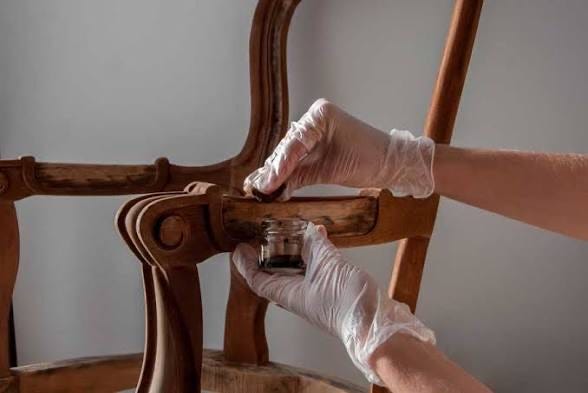
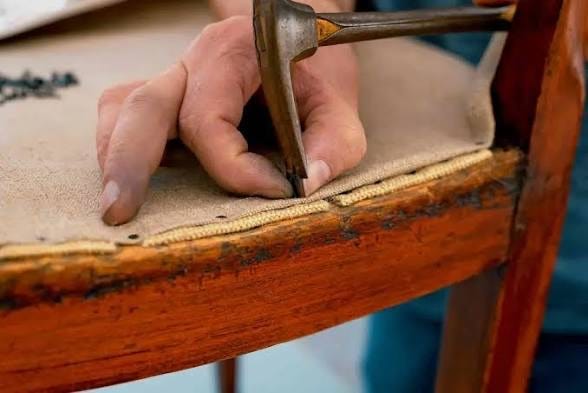
Anyone who has restored an old piece of furniture understands that repair asks something replacement does not.
You have to look closely at what failed. You may have to take the whole thing apart.
Old glue has to be scraped away before the joint can hold again.
Sometimes the repair remains visible afterward.
Relationships can be like that.
Repair may require an honest conversation neither person wants to have.
There may be an apology without excuses.
Something that happened years ago may finally need to be acknowledged accurately.
Trust may return slowly.
The relationship might never look exactly as it did before the break, and perhaps it should not, because healthy repair often involves learning something from the damage.
That takes work.
Throwing something away can happen in an afternoon.
Restoration may take months.
Our flesh naturally prefers whatever costs less.
Christians are supposed to understand the value of restoration better than anyone.
Our entire faith rests upon a God who deals with ruined things.
The gospel itself tells the story of sinners who could never repair what sin had broken, being redeemed at an unimaginable cost through the blood of Christ.
We were not cheap to restore.
First Peter says we were redeemed “with the precious blood of Christ.” 1 Peter 1:19.
That should affect the way we think about what has value.
It should make us slower to discard people simply because relationship has become expensive.
Stewardship belongs here too.
First Corinthians 4:2 says, “Moreover it is required in stewards, that a man be found faithful.”
We often think of stewardship primarily in connection with money, though stewardship reaches into everything God places within our care.
Our possessions.
Our time.
Our homes.
Our church membership.
Our friendships.
Our marriages.
The people God has allowed to become part of our lives.
Faithfulness asks what we are doing with what we have already been given.
Modern consumerism trains us to ask whether something still satisfies us.
A steward asks a different kind of question.
“How should I care for this?”
That question has changed the way I think about many things.
A home needs maintenance because neglect eventually becomes expensive.
A marriage needs attention because familiarity can slowly become carelessness.
Friendship requires investment because closeness cannot live indefinitely on old memories.
Church relationships require humility because we are worshipping beside actual sinners while being one ourselves.
There are things in life that become more valuable because we kept them long enough for history to accumulate inside them.
An old table may carry marks from children who are grown now.
A Bible may have a broken spine because somebody opened it for thirty years.
A friendship may contain enough history that very little explanation is necessary when life becomes hard.
A marriage that has survived decades carries something newlyweds cannot manufacture, because some kinds of intimacy can only be built through staying.
We have become so interested in newness that sometimes we fail to recognize the beauty of worn things that were faithfully tended.
I wonder what this disposable spirit is teaching our children.
If they watch us continually replacing what has lost its shine, abandoning relationships after conflict, and leaving churches whenever something disappoints us, what will they believe commitment means when their own lives become difficult?
Marriage eventually loses novelty.
Churches eventually reveal weaknesses.
Friends eventually fail us.
Children grow into people whose choices occasionally hurt us.
If our primary response to difficulty has always been disposal, where will they learn repair?

There are times when I look around modern life and think we possess more than any generation before us while knowing increasingly less about how to keep anything.
We own more and maintain less.
We connect with more people and know fewer deeply.
We have more churches available within driving distance and sometimes belong nowhere long enough for anyone to know us well.
Something is lost in all that movement.
Roots require remaining somewhere.
That does not mean never changing jobs, houses, churches, or relationships.
Life has seasons, and God moves people.
Wisdom sometimes requires departure.
But a habit of leaving whenever something begins demanding humility will eventually follow us everywhere.
The scenery changes.
We remain.
Then, after several rounds of new beginnings, we may finally have to face the uncomfortable possibility that the common denominator was not always the appliance, the furniture, the church, the friend, or the other person.
Sometimes the main issue is we never learned how to repair.
Proverbs 24:3 says, “Through wisdom is an house builded; and by understanding it is established.”
Established is an old-fashioned word in the best sense.
It carries weight.
Something established has remained long enough to become settled, known, dependable.
I want more of that.
I want to be the kind of person who takes care of what God places in my hands, whether that is an old piece of furniture or a friendship that requires an apology.
I want enough contentment to stop replacing things simply because something newer has been placed in front of me.
I want enough humility to distinguish between a relationship that has become genuinely destructive and one that has merely become inconvenient.
I want my children to see that commitment has hands.
It repairs, maintains, forgives.
It returns to the conversation, and keeps promises after the feeling that inspired them has faded.
There is something deeply countercultural about that approach.
Perhaps Christians should be recognizable partly by the things we refuse to treat as disposable.
We have been entrusted with too much to live carelessly.
And when something God has placed within our stewardship begins to show wear, perhaps our first instinct should not always be to ask where we can find another one.
Maybe sometimes the faithful question is much simpler.
Can this be repaired?
Biblical Womanhood
I wrote “When You Can’t Control It: A 6-Week Bible Study for Those Who Are Tired of Worrying, Overthinking, and Carrying Everything” for the friend whose mind has been working three shifts while the rest of the house sleeps.
You love your people, take your duties seriously, and have slowly begun carrying outcomes, hearts, decisions, and futures that God never placed under your authority.
This study is a fundraiser for this ministry.
The base price is $5.25, but you can choose to give any amount.
Giving over the baseline helps me put this in the hands of friends who cannot afford any amount.
Some of you have already generously given, and I’ve been able to bless a handful of ladies with this study free of charge.
If your circumstances don’t allow you to purchase this today, but you feel it would benefit you—please reach out privately and I will happily give this study to you as a free gift.
If you enjoy my work, please consider visiting my:
Where you will find updated links and descriptions for all of my digital independent studies and devotionals! Every purchase helps fuel the ministry at Biblical Womanhood!
Private reading measurement
We count reading sessions after 30 seconds on a visible page and two interactions. A random browser ID lasts up to 30 days. Reports use approximate countries and hide groups smaller than 10 browser IDs. Your notes, verses, article text and email are not included.
Measurement is off. Browser privacy signals also take precedence.
Your reading place and bookmarks are saved on this browser.