This week I have been writing through a series on the quiet little idols that sit far closer to us than we like to admit.
The quiet little idol of:
These are not the loud, obvious idols we would all quickly condemn.
These are the idols that often grow politely in the corners of an otherwise decent life.
This next one has had its hands around my own throat more than once.
The quiet little idol of productivity.
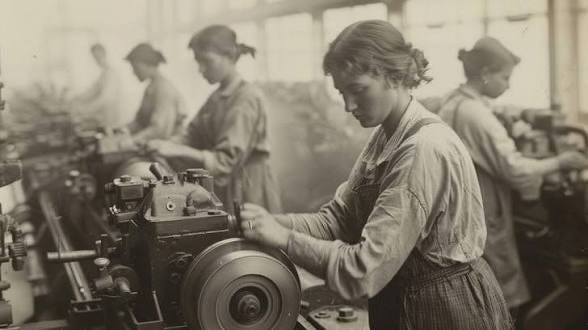
There is something in many of us that feels deeply uncomfortable with stillness.
We do not know what to do with empty space.
Silence feels suspicious.
A free afternoon starts to itch.
If there is no task to complete, no room to straighten, no message to answer, no event to prepare for, no list to conquer, then we begin to feel unmoored, and often a little guilty.
So we stay busy.
Always moving.
Always organizing.
Always signing up.
Always filling.
Always planning.
Always proving.
And sometimes we call that diligence when, if we are honest, it is something far more restless.
I know this because I have seen it in my own heart.
There have been seasons when I felt almost driven by the need to be doing.
If I sat down, I felt the pressure of all that still needed doing.
If I rested, I felt vaguely irresponsible.
If I had a quiet moment, my mind would immediately begin assigning itself another task.
Fold this.
Clean that.
Organize this drawer.
Answer that text.
Start that project.
Fix this issue.
Move on to the next thing.
And because productivity is one of the more respectable idols, people often applaud it while it quietly drains the soul.
A woman can fill every hour and still be spiritually empty.
A mother can keep a spotless house and still be deeply out of order in her heart.
A man can work from dawn to dark and still never truly be at peace.
That is the deceitfulness of this idol.
It looks fruitful.
It feels responsible.
It often wears the clothes of virtue.
But underneath it can be fear, pride, escapism, self-worth tied to output, or a constant need to avoid what rises to the surface when life gets quiet.
Sometimes productivity is just another way to avoid ourselves, our thoughts, and the conviction within our heart.
A young adult can live this way too.
Always moving.
Always out.
Always booked.
Always starting something.
Always with a full calendar because sitting still long enough to think about life honestly feels too exposing.
Questions about direction, choices, loneliness, regret, and fear begin to rise in quiet spaces, so the answer becomes more motion.
More plans. More people. More noise.
Mothers often feel the pull of this idol in an especially pointed way.
We can begin measuring our worth by visible accomplishment.
The laundry folded.
The kitchen reset.
The errands ran.
The appointments made.
The lesson plans finished.
The floors swept.
The meal prepped.
The boxes checked.
And if the day did not produce enough visible proof of usefulness, we can feel strangely diminished.
Even our children’s lives can become infected by this same restlessness.
We fill their calendars because stillness feels wasteful.
Activities stack on activities.
Sports.
Clubs.
Lessons.
Youth events.
Play dates.
Practices.
Tournaments.
Tutoring.
Busy children make us feel like good parents in a culture obsessed with achievement.
But children were never meant to be raised on a diet of perpetual motion.
They need room for boredom, imagination, wandering, reflection, family conversation, unstructured joy, and plain old rest.
Some children are not being trained up.
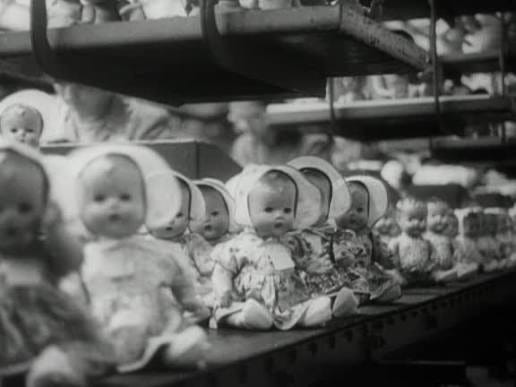
They are being scheduled.
And ministry is not immune either.
This idol can slip very easily into church life because “doing for God” sounds so much holier than doing for self.
We sign up for everything.
Every outreach.
Every event.
Every need.
Every meal train.
Every class.
Every volunteer slot.
We become the dependable one, the always-there one, the one people know they can count on.
And if we are not careful, our identity becomes wrapped up in usefulness rather than faithfulness.
Then one day we are burned out, resentful, exhausted, and secretly irritated at everyone around us for needing what we so eagerly offered.
That is not sustainable service.
That is a Christian trying to prove something, perhaps even to themselves.
God does not call us to do “all the things, all the time.”
Careers can become another altar for this idol.
The satisfaction of one more accomplishment.
One more rung climbed.
One more milestone reached.
One more email answered at midnight because the body is home but the soul is still clocked in.
Many people no longer know how to stop.
They know how to collapse.
They know how to numb out.
But they do not know how to be still.
And then there is the online world, where productivity is often performed like theater.
We feel pressure to look like the busiest, happiest, most efficient version of ourselves.
The thriving mother.
The purposeful family.
The organized life.
The woman with color-coded systems and perfectly used hours and enough energy to still smile in every photo.
We curate our movement and call it abundance.
But the Lord’s picture of life with Him is strikingly different.
“He maketh me to lie down in green pastures: he leadeth me beside the still waters.” Psalm 23:2.
Still waters.
Not frantic waters.
Not noisy waters.
Not waters that churn so hard the sheep cannot rest.
And the Lord says in Psalm 46:10, “Be still, and know that I am God.”
That verse has become harder for modern people than we realize.
To be still means we are not controlling the pace.
We are not managing the image.
We are not proving our value through visible output.
We are not sitting in the presence of God long enough for Him to tell us who He is, and by extension who we are.
That feels deeply threatening to the idol of productivity.
Because if God is God while I am still, then perhaps I am not held together by how much I accomplish.
Perhaps the world does not fall apart when I stop moving for a while.
Perhaps my worth is not tied to visible usefulness.
Perhaps I am loved even when no list was conquered.
That is freeing, but it is also exposing.
I have had to learn this slowly.
I am still learning it.
There are times I can feel the old pull rise in me.
The need to keep moving.
The urge to keep proving.
The temptation to soothe my discomfort by getting one more thing done.
And sometimes the Lord, in His mercy, presses on me hard enough to make me stop.
Not because work is bad.
Work is good.
Diligence is biblical.
Laziness is not what I am defending here.
Homes need tending.
Children need raising.
Jobs need doing.
Churches need servants.
But a woman can be diligent without being perpetually busy.
She can be faithful without becoming frantic.
She can work heartily unto the Lord without making productivity her god.
That is the distinction the heart has to learn.
The idol of productivity says,
“If I stop, I lose worth.”
The Lord says,
“Be still, and know that I am God.”
The idol says, “Fill every gap.”
The Lord says,
“Lie down in green pastures.”
The idol says, “Move faster.”
The Lord says,
“Come unto me… and I will give you rest.”
And some of us badly need to hear that.
We do not need more systems.
We need more surrender.
We do not need more pressure.
We need more peace.
We do not need to prove our lives matter by how exhausted we are.

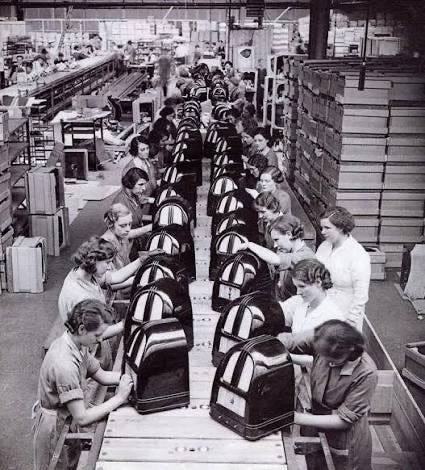
Our lives are not meant to be run like a constant production line.
And if this one stings, I hope it stings kindly.
Because I am not writing from some seat of smugness.
I am writing as a woman who has seen this same idol in her own heart and submitted to it.
I know the temptation to find comfort in accomplishment.
I know the pull of constant motion.
I know how easy it is to become useful and lose touch with being quietly near to God.
So maybe the call this week is not to do more.
Maybe the call is to sit down.
To breathe.
To leave a few things unfinished.
To turn off the performance.
To let the soul come to rest within the body.
To make room for stillness long enough to hear the Shepherd’s voice again.
Because a life that is always producing may still be far from peace.
And peace is worth more than another checked box.
Biblical Womanhood
Please hit the ♥️, comment, or share if you enjoyed this post! This helps keep my content visible to others who may be searching!
Biblical Womanhood Substack is a reader-supported publication. To receive new posts and support my work, consider becoming a free or paid subscriber.
Or support this ministry with a One Time Gift:
For more resources & guides from Biblical Womanhood & Biblical Man please visit our website: