(real quick, if you got this email, let me know. I’ve had several readers tell me they aren’t getting my newsletter/emails)
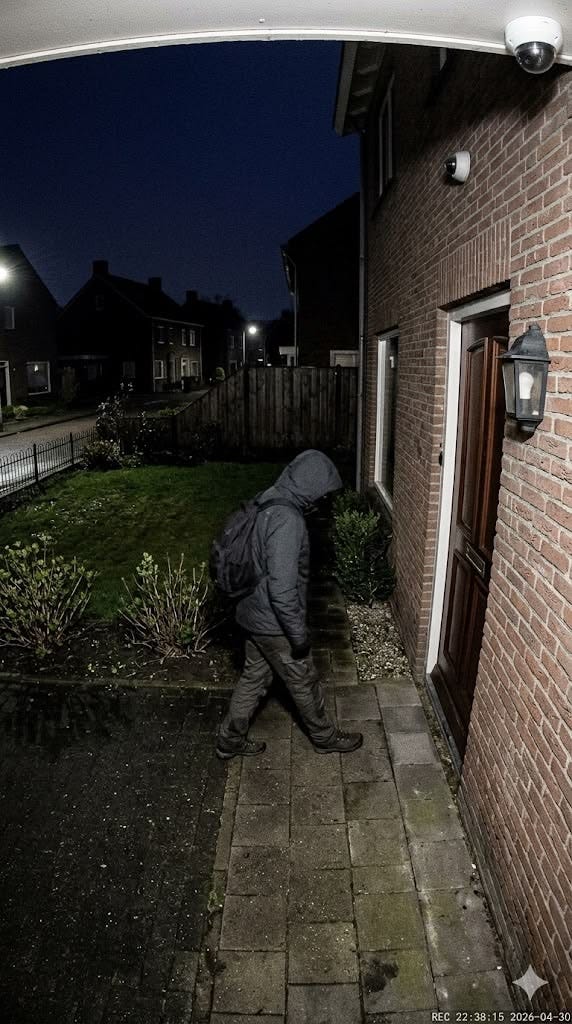
A reader asked me what the Bible says about a man who hears glass break at 2 a.m. with his wife asleep beside him and a child in the next room.
He did not want a tweet. He wanted the verses.
I did not want to answer lightly. So I sat with it. For weeks.
This is the note I owe him.
It is not a hypothetical anymore.
A young mother sends a message at 11 p.m. Her husband is on the road. She has heard her front door handle move twice in the last hour. She owns nothing to defend the children with. She asks if she is allowed to.
A widow writes from a town I have never been to. Her neighbor was beaten in her own kitchen last spring. She wants to know if it is sin to keep a weapon in the drawer next to her Bible.
A father asks if he failed his household by never thinking about this until last week.
These are not internet questions. They are the questions that come to your inbox at the hour you cannot sleep.
You owe them an answer that is not a slogan.
There are two ditches on this road and both of them are deep.
The first ditch is sentimental pacifism. It quotes one verse, treats it like the whole counsel of God, and tells the woman in the kitchen with the child on her hip that the most Christlike thing she can do is let it happen.
That is not faith. That is the abdication of duty dressed in a smile.
The second ditch is anger baptized as courage. It quotes a different verse, treats it like the whole counsel of God, and tells the man at the door that he has not only the right but the longing to use it.
That is not faith either. That is the flesh holding scripture in its teeth.
Christians are commanded to live between these two ditches. Not above them. Between them. On the narrow road.
The Bible does not make you harmless. It makes you accountable.
You cannot answer the question from one verse. The Spirit did not give you one verse. He gave you a book.
Exodus 20:13. Thou shalt not kill.
The sixth commandment in the verse most people quote. It is the verse the first ditch leans its whole weight on.
Matthew 19:18. Thou shalt do no murder.
The same commandment when our Lord himself repeats it. The Greek word he chose carries the meaning of unlawful killing. The Bible distinguishes between murder and other forms of killing. So does the law of Moses. So does the New Testament. You were likely never taught to see that distinction. The text has carried it the whole time.
Exodus 22:2-3. If a thief be found breaking up, and be smitten that he die, there shall no blood be shed for him. If the sun be risen upon him, there shall be blood shed for him.
The thief at night and the thief in daylight. The verse fences the householder. It permits defensive force when a man cannot see, cannot judge, and cannot retreat. It refuses that same force in the daylight when judgment is possible. The verse does not bless rage. It draws a line.
Nehemiah 4:14. Fight for your brethren, your sons, and your daughters, your wives, and your houses.
Nehemiah did not tell the men to fight for their honor. He told them to fight for the people standing behind them.
This is the verse that orders the sword toward people, not toward image. You are not building a reputation. You are defending a household.
Romans 12:19. Dearly beloved, avenge not yourselves, but rather give place unto wrath: for it is written, Vengeance is mine; I will repay, saith the Lord.
Vengeance is forbidden. You do not own that verb. The Lord does.
If your heart is hunting the man who hurt you last summer, this verse calls you back. The defensive sword in the dark is one thing. The hunt is another.
Romans 13:4. For he is the minister of God to thee for good. But if thou do that which is evil, be afraid, for he beareth not the sword in vain.
The magistrate carries the sword by God's appointment. Not the householder, by office. The householder bears responsibility in the dark when the magistrate cannot arrive in time. The moment the officer is at the door, the sword belongs to the office, not to your hand.
Matthew 5:39. But I say unto you, That ye resist not evil: but whosoever shall smite thee on thy right cheek, turn to him the other also.
This is the most misused verse in the conversation.
Our Lord is teaching about insult and retaliation. The slap on the cheek in that culture was an insult, not an assault. He is killing the law of personal revenge.
He is not commanding a mother to surrender her children. He is not commanding a husband to watch his wife be killed. He is not commanding the church to dissolve the family under the banner of meekness.
Read the chapter. He says love your enemies and pray for them that despitefully use you. He does not say hand them your daughter.
Matthew 26:52. Then said Jesus unto him, Put up again thy sword into his place: for all they that take the sword shall perish with the sword.
Peter in the garden.
Peter was not defending a household. Peter was trying to stop the cross. He was fighting the will of the Father. Our Lord rebuked the fight because the fight was against redemption itself.
This verse is not auniversal prohibition on defense. It is a particular rebuke in a particular hour. Read what follows. He heals the ear. He goes to the cross. The lesson is not that swords are forbidden. The lesson is that this hour was appointed and Peter could not stop it.
You cannot take the verse Christ spoke to a man fighting the cross and lay it on a wife defending her sleeping children.
When the conversation gets loud, the verses get quiet. So I wrote five questions for the moment they are needed.
These are not a legal standard. They are a moral standard. They are the questions a Christian should be able to ask in the seconds before, and the hours after.
One. Is it defensive? Are you stopping harm, or chasing it? The sword that turns to hunt is no longer defensive. It has become vengeance.
Two. Is it immediate? Is the threat in front of you now, or are you settling something from last week? Yesterday belongs to the magistrate. The next sixty seconds may belong to you.
Three. Is it necessary? Could you have left? Could you have called? Could you have hidden? If you could, you owed it to your soul to try first.
Four. Is it restrained? When the threat stops, does your force stop? The Christian does not empty the magazine after the man is down. The Christian does not finish what God did not appoint him to finish.
Five. Is it accountable? Will you stand for what you did before God, before the magistrate, before your wife, before your pastor, before your own conscience? If you would hide it, do not do it.
If a Christian cannot answer these five, he is not ready to carry the responsibility, and neither is she. The card is not a permission slip. It is a fence around the soul.
I have been building a small field guide for Christians who refuse cowardice and refuse bloodlust. Pastoral. Short. Honest about what the text says and honest about what it does not.
Today I am releasing two pieces of it.
The first is the Five-Question Use-Of-Force Card. Wallet-sized. The five questions above, formatted to carry. Read it before you ever need it. Read it the night the question becomes real.
The second is the Bible Passage Map. The verses above, plus the rest of the canonical witnesses I have been working through. Each verse with how it should be read, and how it should not. The map tells you which verses bear the weight of the doctrine, which verses are reasoned extensions of it, and which verses are misused on both sides.
You can have either piece for $7.
You can have both as the Household Pack for $12.
If you want the full guide when it is finished, you can join the waitlist. I am not selling the full guide today. The full guide will not be sold until the manuscript is finished and the legal boundary chapters have been reviewed by qualified counsel. I will not put a document in your hands that I have not yet put in front of an attorney. You deserve better than that.
I did not want to write this.
I am not a tactical writer. I am a Sunday School teacher. I have taught the same class for many years. I am a husband. I am a father of five. I drove a garbage truck for a living before I did this. I am not the guy you imagine when you think of a self-defense book.
That may be exactly why I had to write it.
The men and women I am writing for are not looking for a hero. They are looking for a verse. They are looking for a line drawn by a hand they trust, not one drawn by a slogan they were sold.
The Bible draws the line.
It refuses cowardice. It refuses bloodlust. It refuses revenge. It commands the householder to think clearly, love rightly, and answer for the force he uses.
To the young mother in the kitchen. The Lord sees you. You are not paranoid for thinking about this. You are stewarding the souls under your roof.
To the widow with the drawer next to her Bible. You are not unspiritual for the question. You are accountable for the house you live in.
To the father who is just now thinking about this for the first time. You have not failed. You have begun. Begin in the fear of God.
To every reader on either side of the question. The Bible does not make you harmless. It makes you accountable.
That is the whole burden of this guide.
Adam