There is a ditch on both sides of the highway.
Yesterday I reposted an article entitled, “The Devil Loves a Lazy Woman.”
We discussed how a lazy woman can become careless with the work God has given her, allowing laziness to settle over her home, her habits, her marriage, her children, and her spiritual life until neglect begins to feel normal.
We can recognize that danger fairly quickly because it leaves visible evidence behind.
The dishes remain in the sink, the Bible stays closed, the children drift without instruction, and every responsibility feels like an interruption.
The ditch on the other side can be harder to see because it is often swept, polished, organized, and wearing a perfectly ironed skirt.
She rises early.
She keeps an immaculate home.
Her children are dressed properly, speak politely, memorize Scripture, and know how to sit still in church.
Her meals are homemade, her schedule is orderly, her standards are high, and her life appears so carefully arranged that anyone looking in from the outside might assume she has discovered the secret the rest of us somehow missed.
She may assume the same thing.
That is where the danger begins.
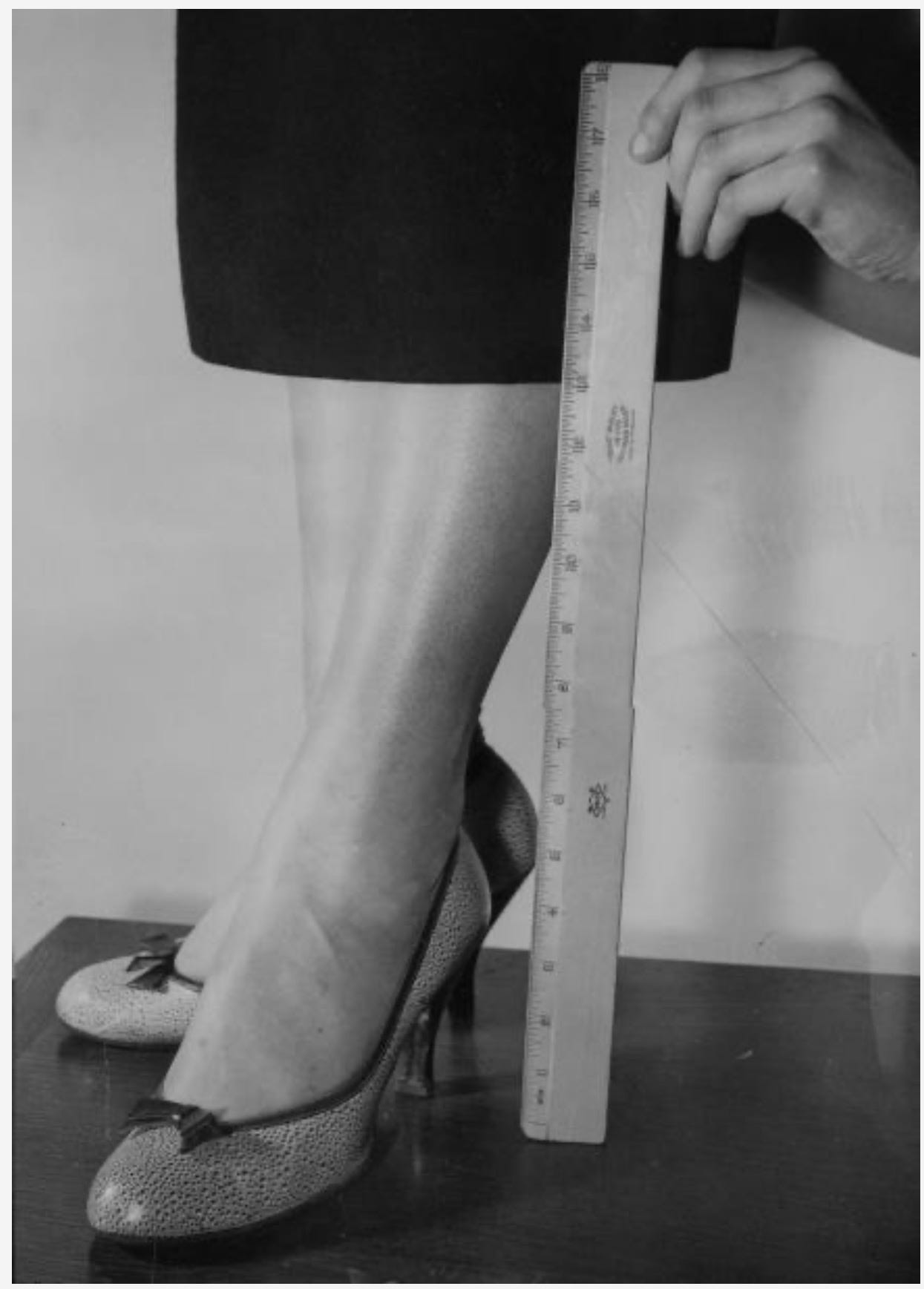
The devil loves a lazy woman because she leaves her calling unattended, but he is equally pleased with the woman who becomes so impressed with her own faithfulness that she can no longer see herself clearly.
The mess in this woman’s life may never appear on the kitchen counter.
It gathers in quieter places, often beneath a spotless surface, where pride can remain undisturbed because everyone is too intimidated to mention it.
Mrs. Perfect has learned how to measure herself by things she can see.
She counts her righteousness by the length of her hemline, the number of meals cooked from scratch, the hours spent homeschooling, the sacrifices she has made, the ministries she has served in, the entertainment she has refused, and the rules she has kept while other women appeared to be failing.
Her personal convictions have become the doctrine and gospel of her pride.
Somewhere along the way, obedience became a scoreboard.
She knows which mothers are too permissive.
She notices which wives do not submit correctly.
She recognizes the women who are too loud, too worldly, too emotional, too disorganized, too relaxed, too ambitious, or too careless.
She casts judgement on a fellow woman’s soul based off of her wardrobe choices.
She has an explanation for why their children behave as they do, why their marriages struggle, and why their homes feel unsettled.
Rarely does she wonder what another woman may be carrying.
Rarely does she consider that a tired mother may have spent the night beside a sick child, that a disorganized home may belong to a woman fighting depression, that the mother whose child is struggling may have spent years praying until she no longer knows what words to use, or that the woman sitting quietly in the back pew may already feel ashamed before anyone looks in her direction.

Mrs. Perfect enters the room carrying an invisible measuring stick, and although she may never say a single cruel word, other women can feel it.
They feel it in the slight pause before she answers.
They feel it in the way her eyebrows lift.
They feel it when she offers advice nobody asked for, when she turns another woman’s confession into a lesson, or when someone shares a painful struggle and receives a polished explanation for what she should have done differently.
Pride has a temperature.
People feel it when they walk into a home where every pillow seems too carefully placed to touch, where children are corrected for making ordinary noise, and where guests quietly wonder whether their presence has disturbed the room.
The house may be beautiful, yet nobody relaxes. They perch carefully on the edge of the furniture, hold their cups with both hands, and leave without ever feeling that they were truly welcomed.
Hospitality requires a home to be inviting.
There should be room for muddy shoes, crumbs that may fall beneath the table, a child interrupting the conversation, a friend crying in the kitchen, and a guest who stays longer than expected.
A home that cannot survive being used has become a showroom, and a woman who values the appearance of welcome more than the inconvenience of welcoming people has misunderstood something important.
The Lord Jesus received people in all their disorder.
They interrupted Him, questioned Him, crowded Him, misunderstood Him, brought crying children to Him, lowered a sick man through a roof, and followed Him into places where He had intended to rest.
His holiness never made broken or dirty people afraid to come near Him.
Sinners felt their sin in His presence, yet they also felt invited to draw close enough to be changed.
A perfection that makes wounded people hide does not resemble Him very much.
Mrs. Perfect may speak often about standards, and standards matter, especially in a world that continually lowers them.
Yet a standard can become a mirror in which a woman admires herself.
She begins by wanting to honor God, and after years of comparing her life with everyone around her, she quietly begins honoring the image she has created.
The Pharisees understood this kind of religion.
Jesus spoke of one who “stood and prayed thus with himself, God, I thank thee, that I am not as other men are.”
He could name his disciplines.
He knew what he avoided and what he gave.
He believed he was thanking God, though the prayer slowly circled back to himself.
“I fast twice in the week, I give tithes of all that I possess.”
There was another man nearby who would not lift his eyes toward heaven.
He simply said, “God be merciful to me a sinner.”
Jesus said that man went home justified.
Mrs. Perfect has trouble praying that prayer with any real urgency because she has become accustomed to seeing herself as the example in every story.
When she reads about the wise woman, she recognizes herself.
When she reads about the foolish woman, someone else comes to mind.
Sermons about pride remind her of a difficult relative.
Messages about repentance bring to mind a woman at church who desperately needs to hear them.
She keeps finding other people in the Bible.
She rarely finds herself.
That is one of the devil’s finest tricks, because a woman who believes she has arrived becomes almost impossible to teach.
She can hear truth without allowing it to reach her.
She can explain conviction away before it has time to settle.
She can defend herself so thoroughly in her own mind that repentance never seems necessary.

When was the last time you were corrected and received it without immediately preparing your defense?
When was the last time the Holy Spirit pressed His finger upon something in your heart and you allowed Him to remain there, rather than hurrying toward a reason why your reaction was understandable?
When was the last time you apologized without adding an explanation?
“I am sorry, but you need to understand…”
“I should not have said that, but I was tired…”
“I know I hurt you, but you hurt me too…”
Oftentimes the word “but” is where repentance goes to die.
A sincere apology is a humbling thing because it leaves us standing without our carefully gathered evidence.
We cannot control how the other person responds.
We cannot guarantee immediate reconciliation.
We simply acknowledge the truth and trust God with what follows.
Mrs. Perfect finds this especially painful because her identity has been built upon being the one who knows better.
She is the responsible one.
She is the sacrificial one.
She is the spiritually mature one.
Slowly, almost without realizing it, she begins believing that her usefulness has placed her beyond ordinary accountability.
Pride rarely sounds like boasting inside our own heads.
More often it sounds like explanation:
“I only said it because someone needed to.”
“I have higher standards because I am right with God.”
“They think I am judgmental because they feel convicted.”
The running commentary never stops, and in every version of the story she remains reasonable, misunderstood, and ultimately right.
The hard truth is, she may have suffered deeply, too.
Sometimes perfectionism grows in the soil of fear.
A woman who grew up in chaos may decide that her children will never experience the uncertainty she knew.
A wife who watched her parents’ marriage collapse may attempt to control every detail of her own home.
A mother who has known public embarrassment may become terrified of what her children’s failures will say about her.
She tightens her grip because control feels safer than trust.
Her standards become walls.
Her routines become proof that everything is fine.
Her children learn that mistakes cost more than they can afford, so they hide them.
Her husband learns that honesty will be met with instruction, so he grows quiet.
Her friends share only the parts of their lives that have already been cleaned up.
Mrs. Perfect may believe everyone respects her.
Some may simply be afraid of disappointing her.
Children raised beneath the constant pressure of a perfect mother can become very skilled performers.
They learn the correct answers, the expected expressions, and the acceptable ways to speak about the family.
They know how to look obedient when others are watching.
Yet inside, where the real work of discipleship must eventually take place, they may be growing weary of a Christianity that feels like an endless inspection.
A child needs to see repentance lived out in the home.
He needs to hear his mother say, “I was wrong.”
He needs to watch her return after losing her temper, kneel beside him, and ask forgiveness without blaming him for provoking her.
He needs to know that maturity does not mean never failing, because one day he will fail badly enough that he needs to understand what grace looks like.
Our children already know we are imperfect.
We do not protect their respect by pretending otherwise.
We teach them hypocrisy when we deny what they can plainly see.
There is something deeply unsettling about a woman who speaks often of grace while making everyone around her feel that mistakes are unacceptable.
She may sing about mercy on Sunday morning and spend the afternoon reminding her family of everything they did wrong.
She may quote verses about the tongue while using silence as punishment.
She may speak warmly to women at church, then criticize them on the drive home.
The devil is content to let her keep every outward standard so long as pride remains untouched.
He does not mind a clean house that contains a cold spirit.
He is not troubled by modest clothing worn with contempt.
He can tolerate a family Bible time that leaves children feeling continually examined.
He is perfectly willing for a woman to appear righteous while becoming increasingly unreachable.
Perfectionism can begin to resemble a God complex because the perfectionist assumes responsibilities God never gave her.
She tries to control how others see her, how her children turn out, how her husband behaves, how every event unfolds, and how people respond to her efforts.
When reality refuses to cooperate, she becomes anxious, angry, or offended because the life she arranged has failed to follow her script.
Humility loosens its grip.
Humility allows other people to be unfinished.
Humility can sit in a messy room without silently rearranging it.
Humility can receive wisdom from someone younger, less polished, or very different.
Humility remembers that any goodness visible in our lives arrived by grace and continues by grace.
“What hast thou that thou didst not receive?” Paul asked the Corinthians.
“Now if thou didst receive it, why dost thou glory, as if thou hadst not received it?”
That question reaches into every carefully maintained corner.
If your children are walking with God, you received mercy.
If your marriage is strong, you received mercy.
If you were taught truth early, you received mercy.
If discipline comes naturally to you, you received mercy.
If your home is peaceful, your mind is clear, your body is strong, and your hands are capable, you received mercy upon mercy.
Once a woman begins seeing her life through that lens, she has less appetite for looking down upon anyone else.
The answer is not for Mrs. Perfect to abandon diligence, lower every standard, or become careless with her responsibilities.
She needs to bring those good things back beneath the lordship of Christ, where they can remain gifts rather than becoming evidence for the case she is building in her own favor.
She may need to leave a dish in the sink and listen when her child wants to talk.
She may need to invite someone over before the house is ready.
She may need to allow her children to be seen as human.
She may need to ask her husband whether her standards have made home feel peaceful or tense.
She may need to call someone she wounded years ago and offer the apology she has rehearsed around for far too long.
She may need to sit quietly before the Lord and pray a frightening prayer.
“Search me, O God, and know my heart: try me, and know my thoughts.”
Then she must wait long enough to hear the answer.
The Lord may show her places where discipline became control, where discernment became suspicion, where conviction became superiority, and where sacrifice became a debt she expected others to repay with admiration.
What He reveals may sting, especially for a woman who has spent years believing she was doing everything right.
Yet there is mercy in being brought low.
There is freedom in discovering that you do not have to be the perfect mother, the perfect wife, the perfect homemaker, or the woman who always knows what to say.
You can be a woman who needs grace in front of her children, beside her husband, among her friends, and before her God.
A woman who can be corrected is still growing.
A woman who can repent is still tender.
A woman who can laugh when the cake falls, welcome guests into a cluttered room, apologize when her tone wounds, and receive another person’s wisdom without feeling diminished has become far more beautiful than perfection could ever make her.
The devil loves a “perfect” woman because a woman convinced of her own goodness will carefully clean every room except the one where her perfectly dressed pride is hiding.
May the Lord give us enough light to find it, enough humility to name it, and enough grace to stop protecting the version of ourselves that He is trying to change.
Biblical Womanhood
If this ministry has blessed you, would you ♥️, comment, or share? Paid subscribers and founding members help keep Biblical Womanhood alive; founding members receive my 2026 digital products free.
*The AI detector is turned off on my posts. If you have questions about how I use AI to edit my posts please ask me, I’m a real person who values honesty and transparency person to person.